search

Lies!

You may have heard the internet fun fact that one in every 200 men alive today is a direct descendant of Genghis Khan. Compelling stuff.

It is also, as researchers recently confirmed by pulling ancient DNA from Mongol tombs in Kazakhstan, completely made up. As it turns out, no one has ever found Genghis Khan’s tomb, so there was never any DNA to work from in the first place.

The internet encountered this educated guess sometime in the early 2000s, decided it was true, and has been confidently repeating it ever since. This is, of course, entirely out of character for the internet.


I found this meme on Facebook. Ergo, it must be true.

The Hunt

What actually powered Genghis Khan’s rise to world domination was considerably less salacious. It was a hunting technique called the nerge.

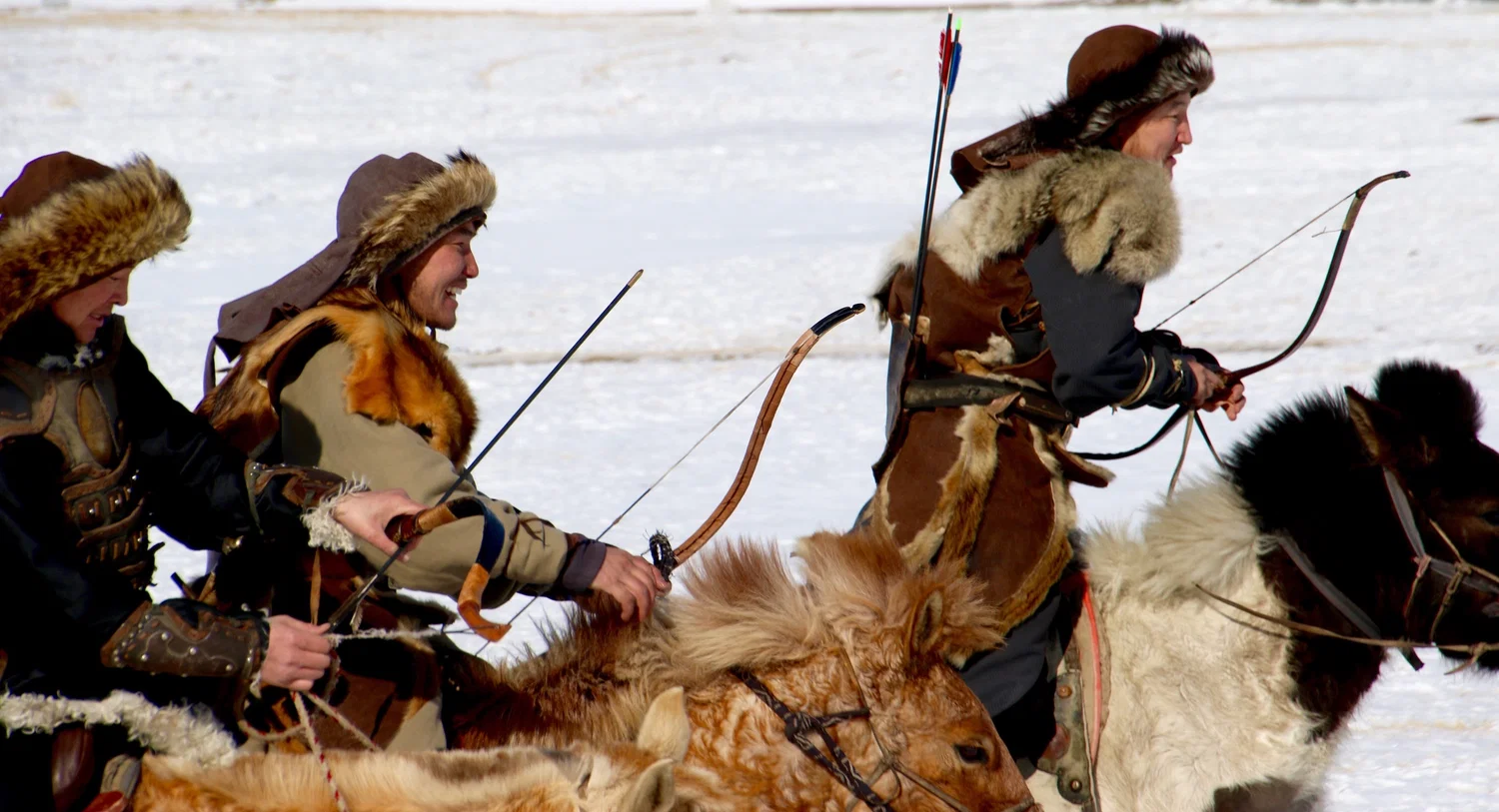
In the nerge, thousands of Mongol warriors on horseback would spread out in a line across the steppe (sometimes covering a full day’s journey in each direction!) and then spend weeks slowly tightening that line into a circle, driving all the game in the region toward the center, where it would be killed and preserved to help get the people through the Mongolian winter.

Genghis Khan applied this encircling maneuver to military conquest. He surrounded and overwhelmed armies, cities, and eventually whole countries, until he had built the largest contiguous land empire in human history.

The nerge worked and it worked spectacularly.

FROM BRITANNICAThe extent of the Mongol Empire at various points in history.

Enter Khubilai

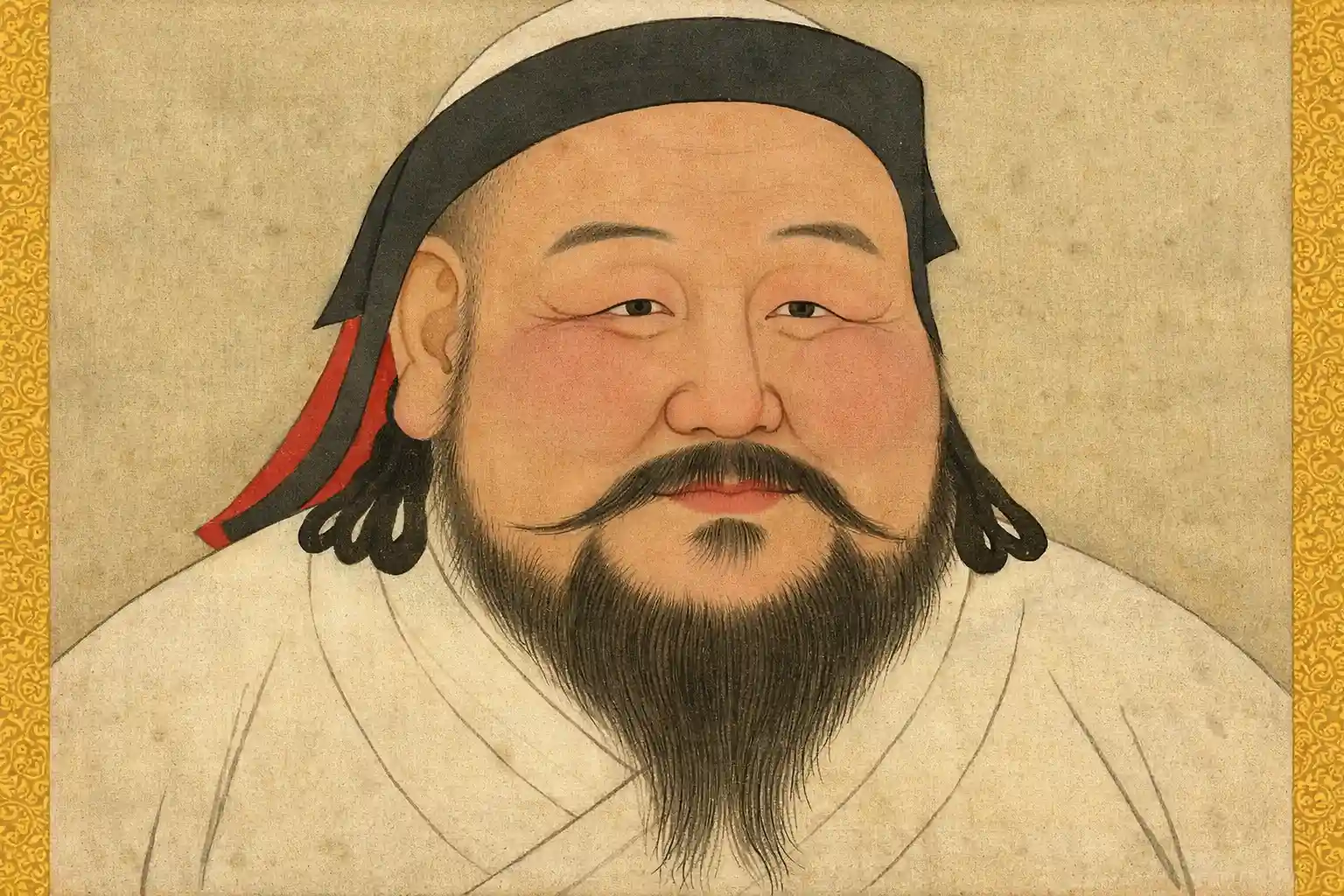
Three generations later, the nerge was still in use by Genghis’ grandson, Khubilai.

There is not delicate way to put this: Khubilai Khan was extraordinarily obese. How obese you ask? He was so obese that he could no longer be carried by a horse. He also suffered badly from gout, the entirely predictable result of a life organized around wine and rich food.

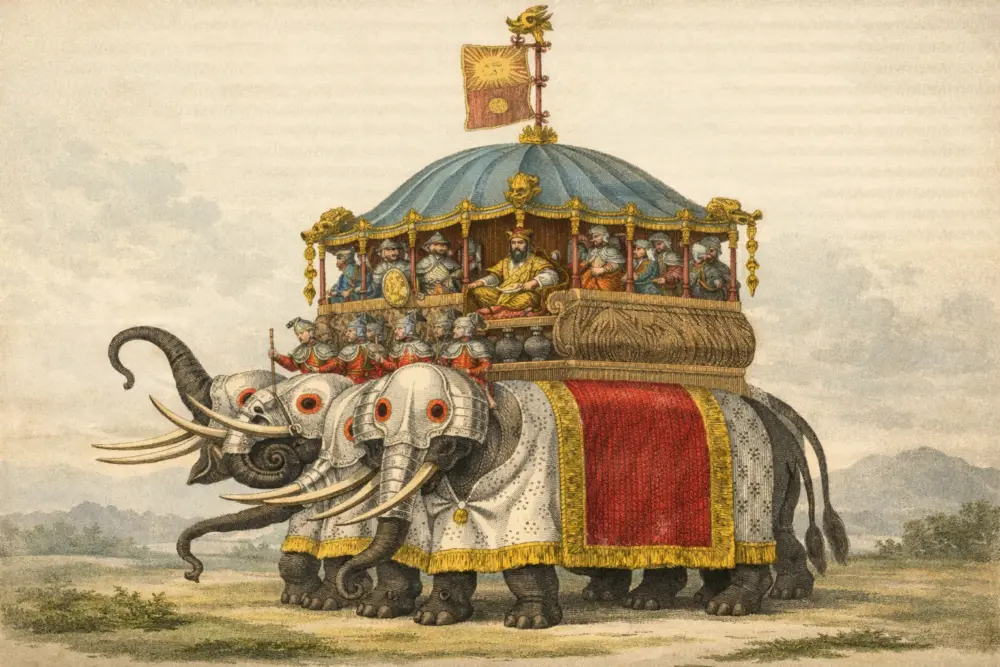
Khubilai’s workaround was to have a room built. Like, an actual room with walls, ceiling, comfortable furniture, a table at which to continue eating and drinking.

This room was then strapped to the backs of four elephants. When it was time for the hunt, Khubilai was carried in this mobile dining room to the center of the nerge formation – the same spot where his grandfather had once helped close the circle – and there he waited for his warriors to drive the game toward him.

When the moment was right, servants would roll back the roof, falconers would release their birds to do the actual catching, and Khubilai would watch from his chair, glass in hand, and claim credit for the hunt.

Artistic rendering of Khubilai’s elephant room.

A Caricature of Itself

Technically speaking, the nerge hadn’t disappeared. The warriors still spread out across the steppe. The circle still closed. Animals were still caught. But at some point in the three generations between Genghis and Khubilai, the thing had quietly morphed into something else entirely.

What had begun as a massive, demanding, coordinated feat of human endurance had become, at its center, a morbidly obese man reclining in a furnished room on four elephants, wine in hand, roof rolled back for optimal bird-watching, waiting for other people to bring the animals to him.

Simply put, the nerge had become a caricature of itself. The name was the same, the occasion was the same, but the thing itself had drifted so far from its origins that Genghis Khan probably would not have recognized it.

WORLD HISTORYLess portly Mongol hunters using traditional weapons.

The Gospel Connection

We see this same dynamic at work in the bible stories about Jesus healing on the Sabbath (and getting grief for it every single time).

In Matthew, he heals a man with a shriveled hand in the synagogue while the Pharisees watch specifically to catch him doing it.

In Mark, the same scene plays out with Jesus looking around at his accusers in open anger before he acts.

In John, he restores a man who had been unable to walk for thirty-eight years, and the authorities respond by persecuting him. Each time, the objection is the same: wrong day of the week.

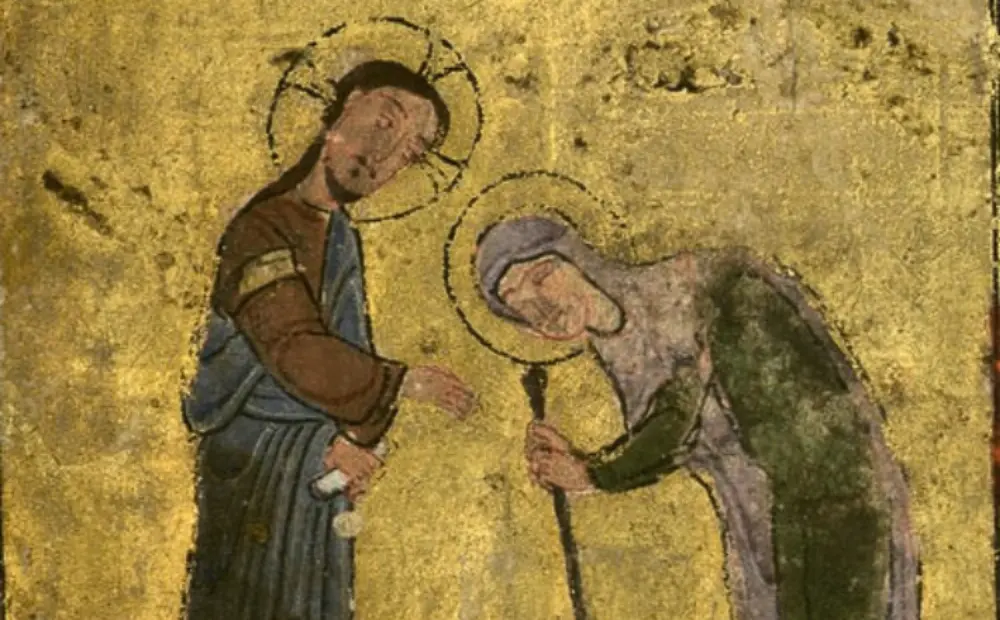
We find what is perhaps the most absurd example of this in Luke. In this passage, Jesus encounters a woman who has been bent over double for 18 years, calls her forward, and heals her on the spot. Again, on the Sabbath. The synagogue leader’s response is to remind everyone that there are six perfectly good days available for this sort of thing. If she wanted to be healed so badly, she could have come on one of those ways.

The synagogue leader probably doesn’t seem like a sympathetic figure to most modern readers. But it’s worth understanding where he’s coming from, because the Sabbath commandment didn’t start out as an arbitrary rule. It started as something genuinely radical.

Historical depiction of Jesus healing the woma bent over double from Luke 13.

Radical → Caricature

The Israelites had just come out of 400 years of slavery in Egypt. 400 years of being treated not as human beings but as instruments of someone else’s empire. And so God gave them a command that would have been almost incomprehensible in the ancient world: one day in seven, everyone stops. Not just the wealthy. EVERYone: servants, foreigners, even the animals. It was a declaration that human beings don’t exist merely to be useful. For people who had spent generations as tools, this wasn’t a fussy, non-sensical rule. It was a gift.

Over the centuries, though, that single liberating command had been elaborated into a labyrinth of thirty-nine categories of activities prohibited on the sabbath. It also had drifted so far from its origins that it was now being used to tell a woman who had been bent double for eighteen years to come back tomorrow. The tradition born to say that no human being should ever be held in bondage was perfectly content to leave her right where she was.

Simply put, it had become a caricature of itself.

Extra Info for Bible Nerds

Because it often entailed the grinding of various roots and herbs in order to make poultices and salves, non-emergent healing on the Sabbath was disallowed under the prohibition against grinding.

Click here to view all 39 categories of work prohibited on the Sabbath.

Historical depiction of Jesus healing the woma bent over double from Luke 13.

Are We Still Hunting?

Every community eventually faces this. Traditions don’t announce when they’ve crossed the line from serving people to being served by people. They rarely feel different from the inside. The thirty-nine categories or prohibted work probably felt like faithfulness to the synagogue leader. Khubilai Khan almost certainly believed he was honoring his grandfather’s legacy.

A man in a room on four elephants can still tell himself he’s hunting.

The question worth sitting with isn’t whether our traditions are old, or meaningful, or sincerely held. It’s whether they still do what they were originally meant to do. Because somewhere along the way, the nerge got a sunroof. And somewhere along the way, a tradition born to set people free started telling a bent woman to come back tomorrow.

So the question is worth asking, regularly and honestly: what are we actually doing here? And is it still what we said we were doing?

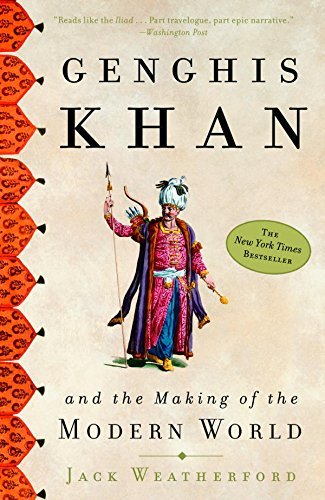
I first encountered the story of Genghis, Khubilai, and the nerge in Jack Weatherford’s Genghis Khan and the Making of the Modern WorldIt’s a fun, informative, unexpectedly captivating read.

get transforming love stories delivered to your inbox!